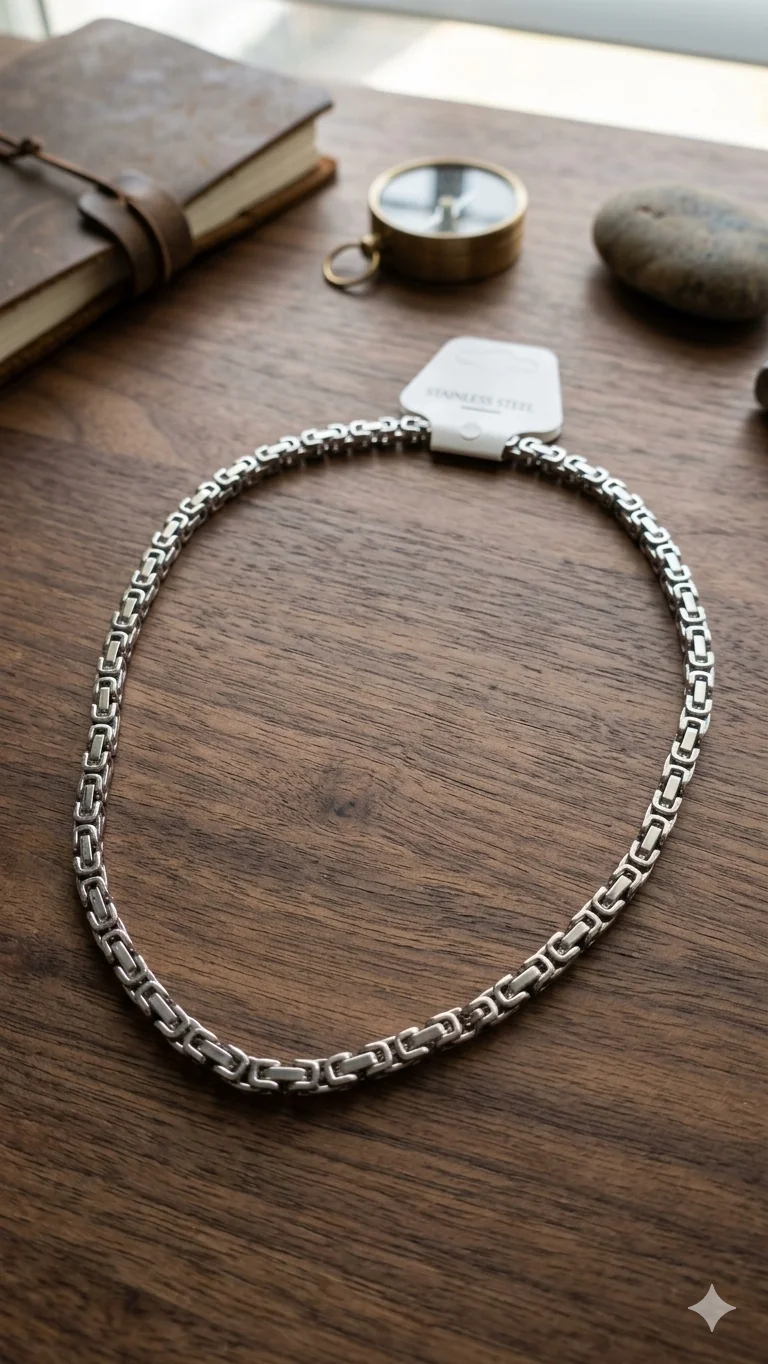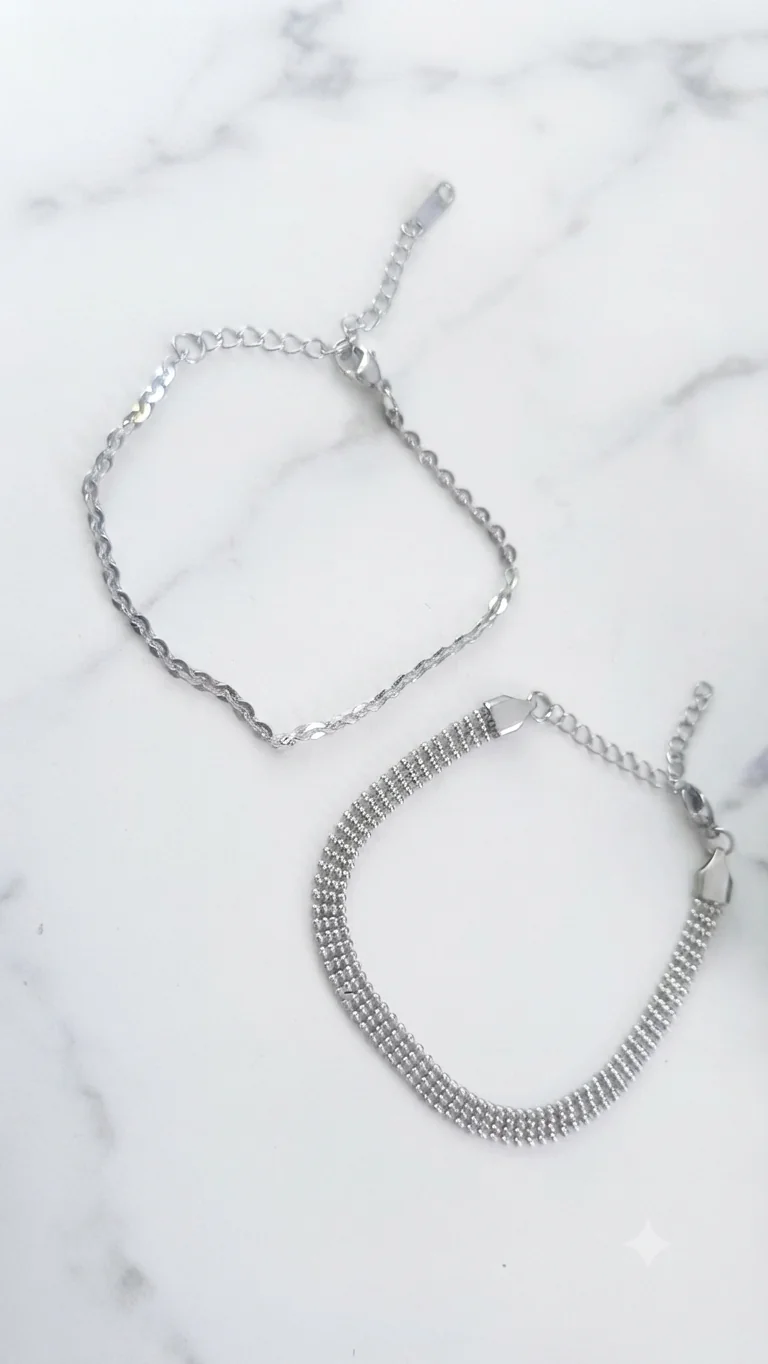
Stainless steel has developed from an industrial material into the most popular material for everyday jewellery. The reason is simple: it withstands what silver resents — water, perspiration, sun cream and daily wear.
1. It does not tarnish
The greatest advantage over silver. Stainless steel does not react with sulphur from the air, so no dark layer forms. A stainless steel bracelet looks the same after two years as it did on the first day — without your ever having polished it.
2. Rustproof, even in water
The chromium content forms an invisible protective layer that renews itself. Showering, washing hands, rain: all unproblematic. Only with chlorinated and salt water is a brief rinse afterwards advisable.
3. Kind to the skin with the right quality
Surgical steel (316L) does contain nickel but releases practically none — it is firmly bound in the alloy. For most people with a nickel allergy it is therefore well tolerated. With a very strong allergy, titanium remains the safest choice.
4. Scratch-resistant in everyday use
Stainless steel is considerably harder than silver or gold. Where a silver ring shows signs of wear after months, stainless steel stays smooth. That makes it ideal for pieces you never take off.
5. Easy to care for
Lukewarm water, a drop of washing-up liquid, a soft cloth — done. No polishing cloths, no special baths, no effort.
6. Attractively priced
A stainless steel bracelet costs a fraction of a comparable silver piece. That makes it possible to own several models and change them according to the occasion.
7. Versatile in appearance
Stainless steel comes polished, brushed, PVD gold-plated or black coated. The range extends from the minimalist men's bracelet to the delicate ladies' necklace.
Where stainless steel reaches its limits
- Size alteration: Stainless steel rings can hardly be widened or reduced — the right size matters more than with silver.
- Coatings: Gold-plated versions can wear away over the years, especially at points of friction.
- Investment value: Stainless steel has no material value like gold or silver — it is jewellery for wearing, not an investment.
Stainless steel or silver — which suits you?
Choose stainless steel if the jewellery is worn daily, comes into contact with water and is to be easy to care for. Silver suits better if you like the warm, lively shine and are prepared to polish occasionally.
Frequently asked questions
Can stainless steel turn skin green?
No. Green discolouration is caused by copper in cheap alloys. Genuine stainless steel contains no free copper and therefore does not rub off.
What does 316L mean?
The common designation for surgical steel. The “L” stands for “low carbon” — a low carbon content that increases corrosion resistance. This quality is also used for medical instruments.
How do I recognise good stainless steel jewellery?
By the workmanship: clean edges, an even surface, clasps that sit properly. And by the material information — reputable suppliers name the alloy.