Layering means deliberately wearing several pieces of jewellery on top of one another. The look appears casual and personal — provided the pieces complement each other rather than compete. These rules make the difference between curated and accidental.
Necklaces: it comes down to the lengths
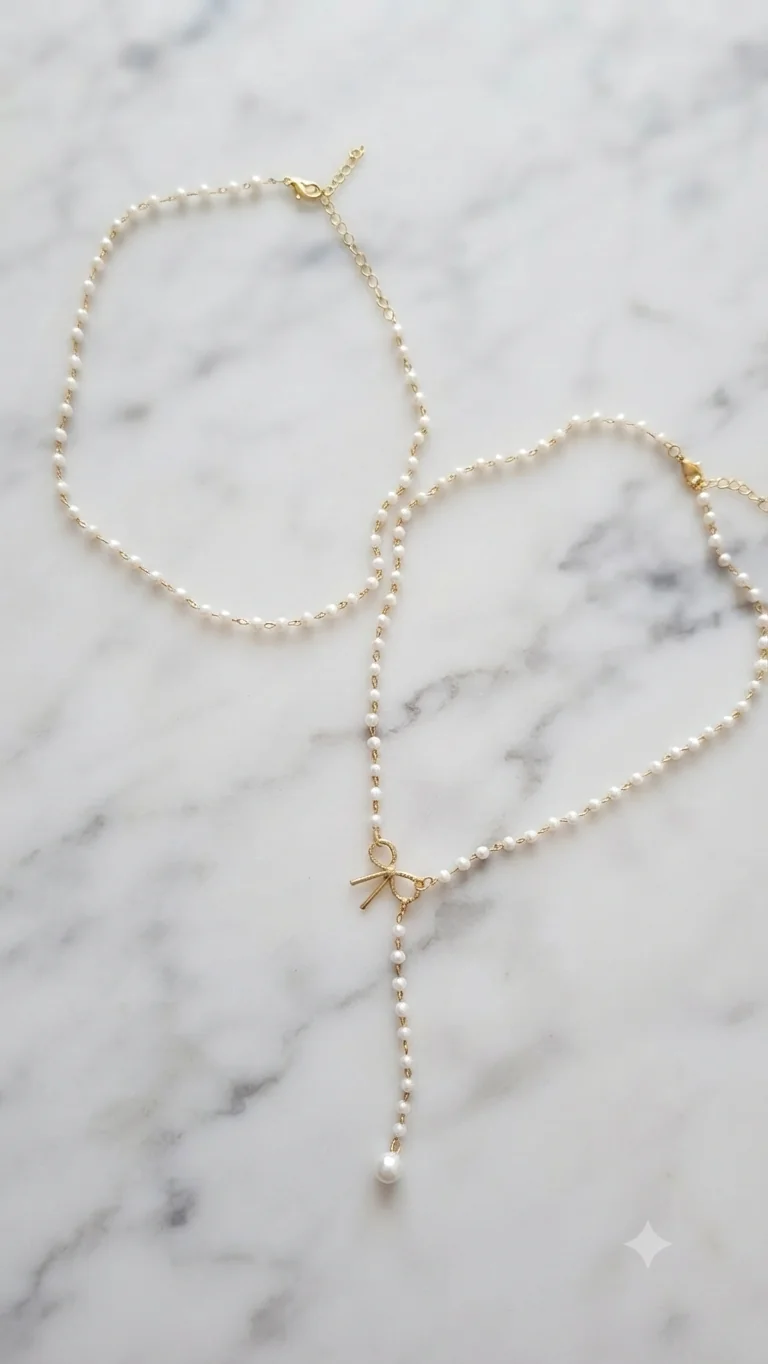
The most important factor is the distance between the necklaces. If they lie too close together they tangle and look restless. There should be at least five centimetres difference.
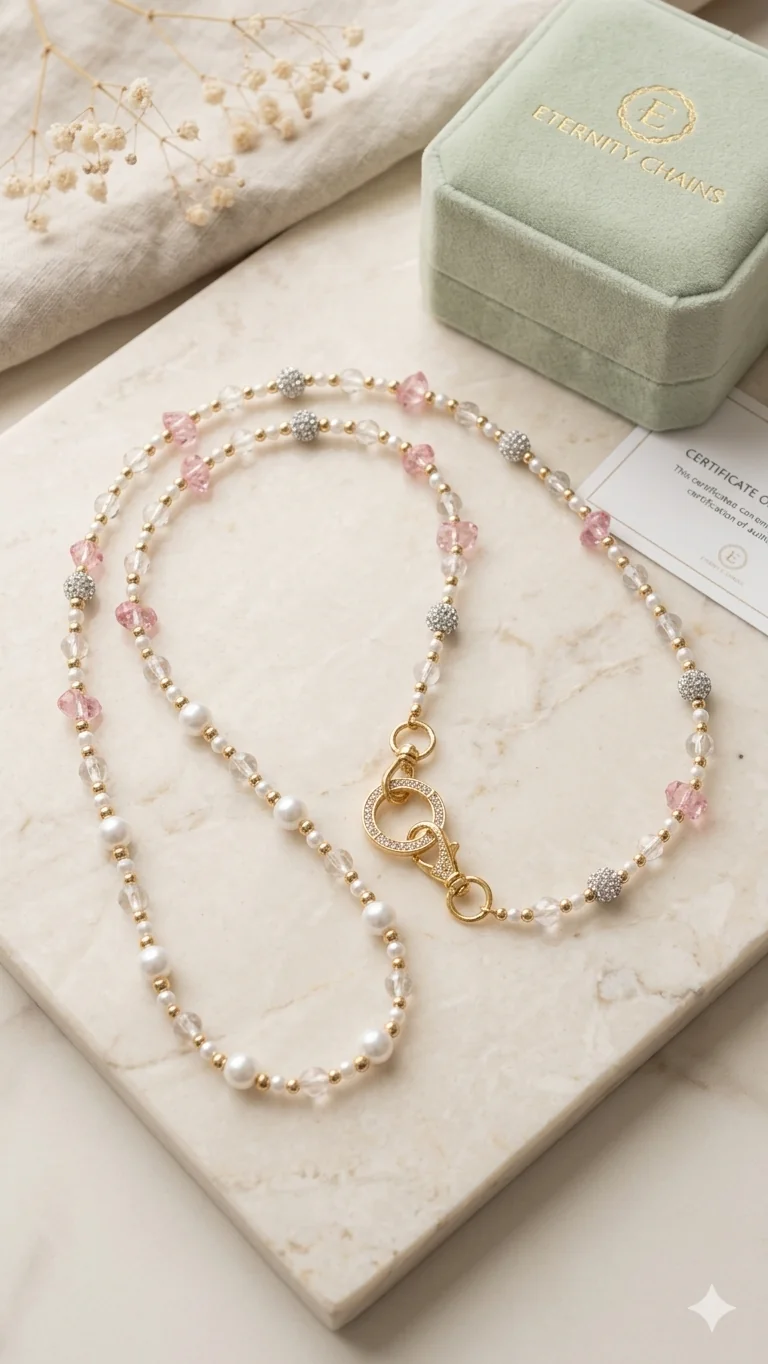
- Two necklaces: 40 cm and 50 cm — the starting point, works with almost any outfit.
- Three necklaces: 40, 45 and 55 cm — the longest carries the most striking pendant.
- Choker plus long necklace: 35 cm and 60 cm — full of contrast and modern.
Lengths and their effect
- 35–40 cm (choker): Sits close to the neck, emphasises the collarbone.
- 42–45 cm (collier): The classic length, ends just below the collarbone.
- 50–55 cm (matinée): Falls at chest height, ideal for pendants.
- 60–80 cm (opera): Long, elegant, visually lengthening.
Matching the neckline
The finest combination has no effect if it collides with the neckline:
- V-neck: Necklaces that follow the line — so longer ones with a pendant.
- Round neck: Short necklaces over the fabric or a long one that falls clearly below it.
- High collar: Only a long necklace — everything else disappears.
- Strapless top: Free rein for layering, here you may do more.
Mixing gold and silver — yes, you may
The strict separation of metals has not applied for years. To make the mix look deliberate rather than awkward, one simple trick helps:
Wear a piece that contains both metals — a bicolour bracelet, for instance. It visually connects the other pieces and turns the mix into an intention.
Alternatively: let one metal dominate (roughly 70 to 30) instead of using both equally strongly.
Stacking rings
With ring stacking, balance comes before quantity:
- Two to three rings on one hand look curated, five quickly look overloaded.
- Leave at least one finger free — that creates calm.
- Combine different widths: one wide ring as an anchor, two slim ones alongside.
- A statement ring shows to best effect when the other pieces remain plain.
Bracelets: mixing textures
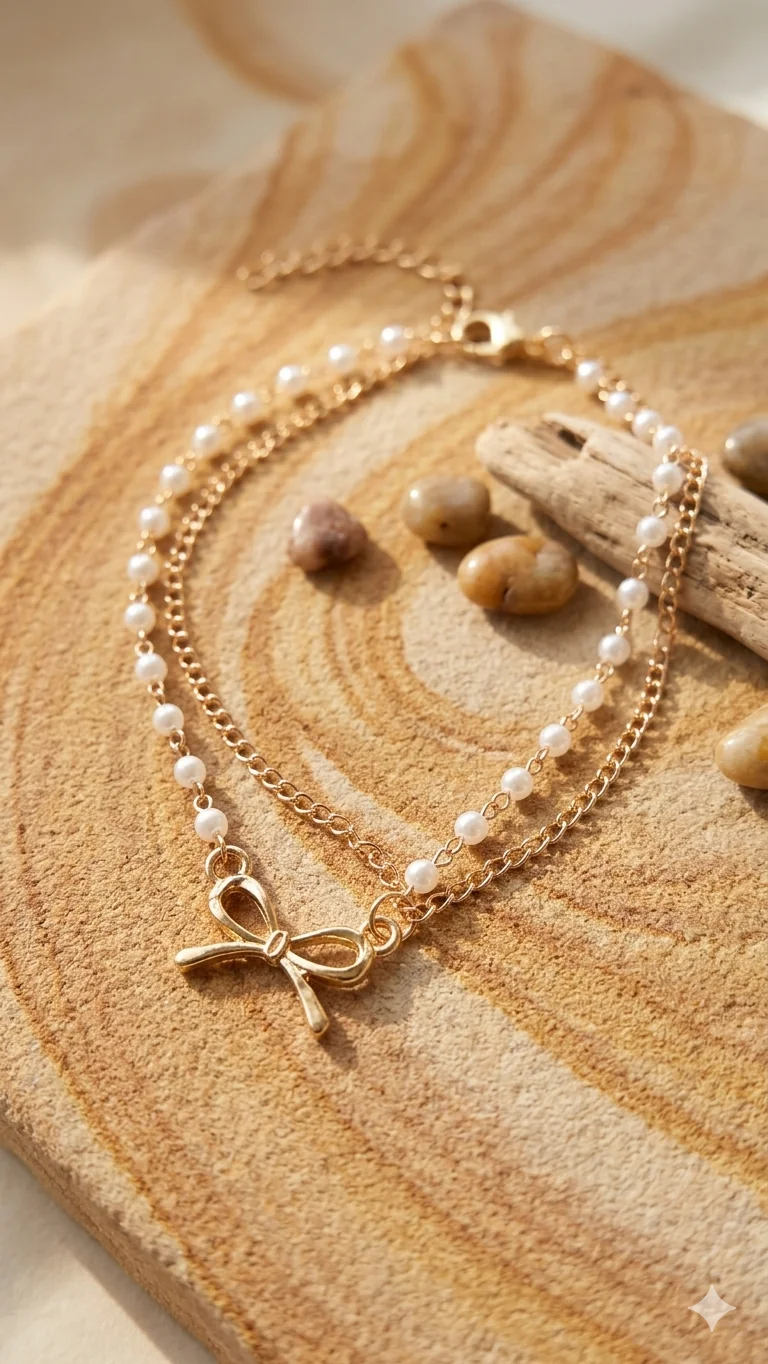
On the wrist the look lives from different textures. A beaded bracelet next to a fine chain, a natural stone bracelet next to smooth stainless steel — this contrast is what makes it interesting.
Three to four pieces are a good upper limit. If you wear a watch, it counts too and takes on the role of the anchor.
Earrings: the new room to play
The ear is layered too. Anyone with several piercings combines small studs with a larger hoop. Important: one striking piece is enough, the rest stays understated.
The one rule that counts
One focal point per look. If the necklace stands out, earrings and rings stay restrained — and the other way round.
Everything else is a matter of taste. Layering lives from looking like you and not like a catalogue. Start with two pieces and add by feel.
Frequently asked questions
How do I stop necklaces tangling?
A sufficient difference in length is half the battle. Layering clasps (small magnetic clips) that gather several necklaces at the nape also help.
Does layering also suit the office?
Yes, in an understated form: two fine necklaces in one metal, a slim ring, small ear studs. The effect is there without appearing obtrusive.
How many pieces are too many?
If, when you look in the mirror, you no longer know where to look first, there is one too many. Take away the least conspicuous one.